Stop Comparing Prices First: How Professional Buyers Evaluate Magnetic Track Lighting Suppliers
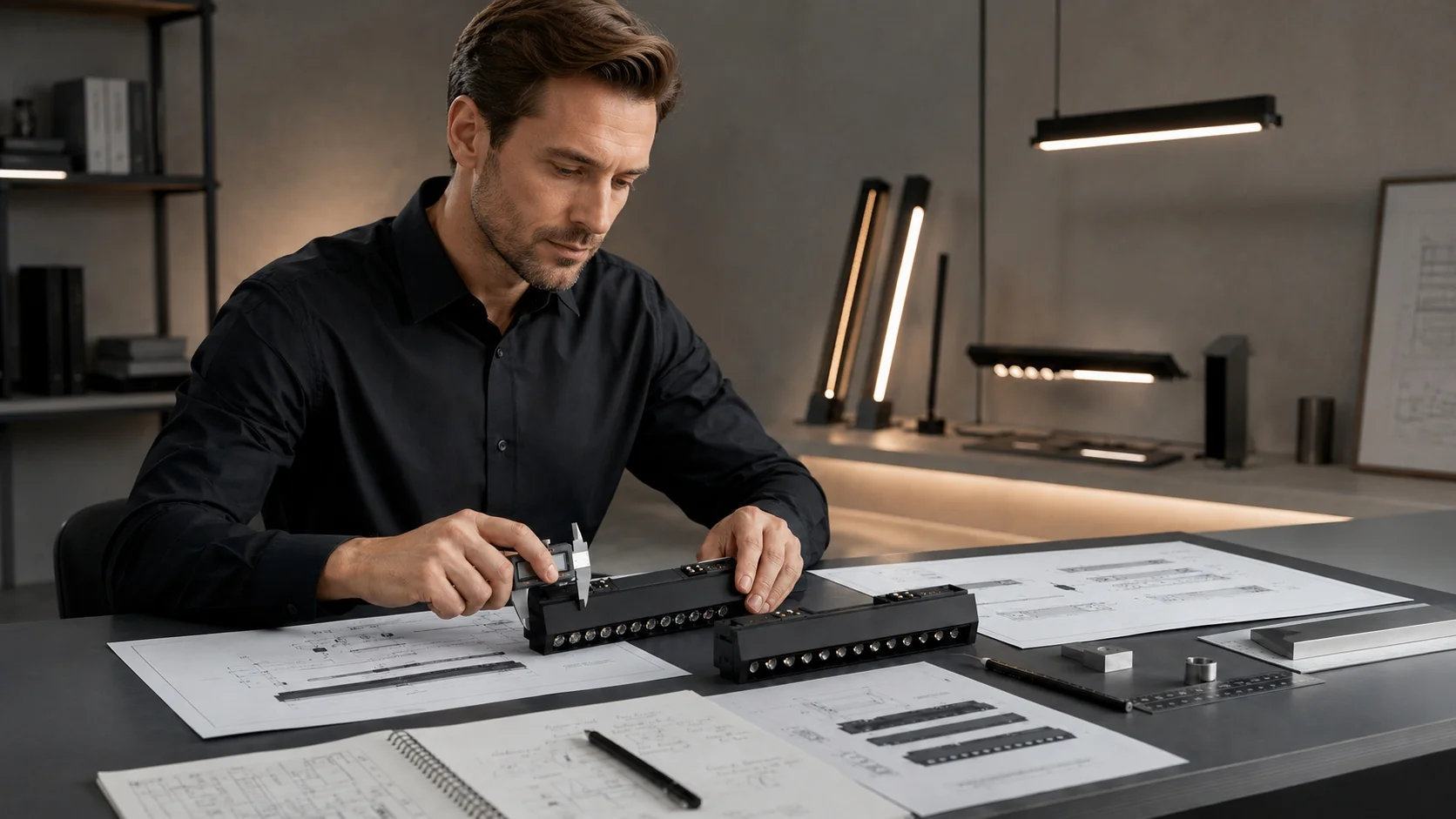
Most buyers think they are comparing products.
In reality, they are comparing supplier engineering reliability risk.
Price is not the first filter.
Engineering capability is.
This article shows how professional buyers eliminate weak suppliers before requesting a quotation.
1. Buyer Decision Problem
Most procurement processes start like this:
"Please send me your best price."
At this moment, the buyer believes the evaluation process has begun.
But in reality, it has already gone wrong.
Because price comparison assumes one condition:
All suppliers are technically equal
In magnetic track lighting projects, this assumption is almost always false.
Two suppliers may offer:
- same wattage
- same appearance
- same CRI
- similar catalog
But behave completely differently in real projects:
- flickering after installation
- loose modules after usage
- light leakage over time
- maintenance cost increase
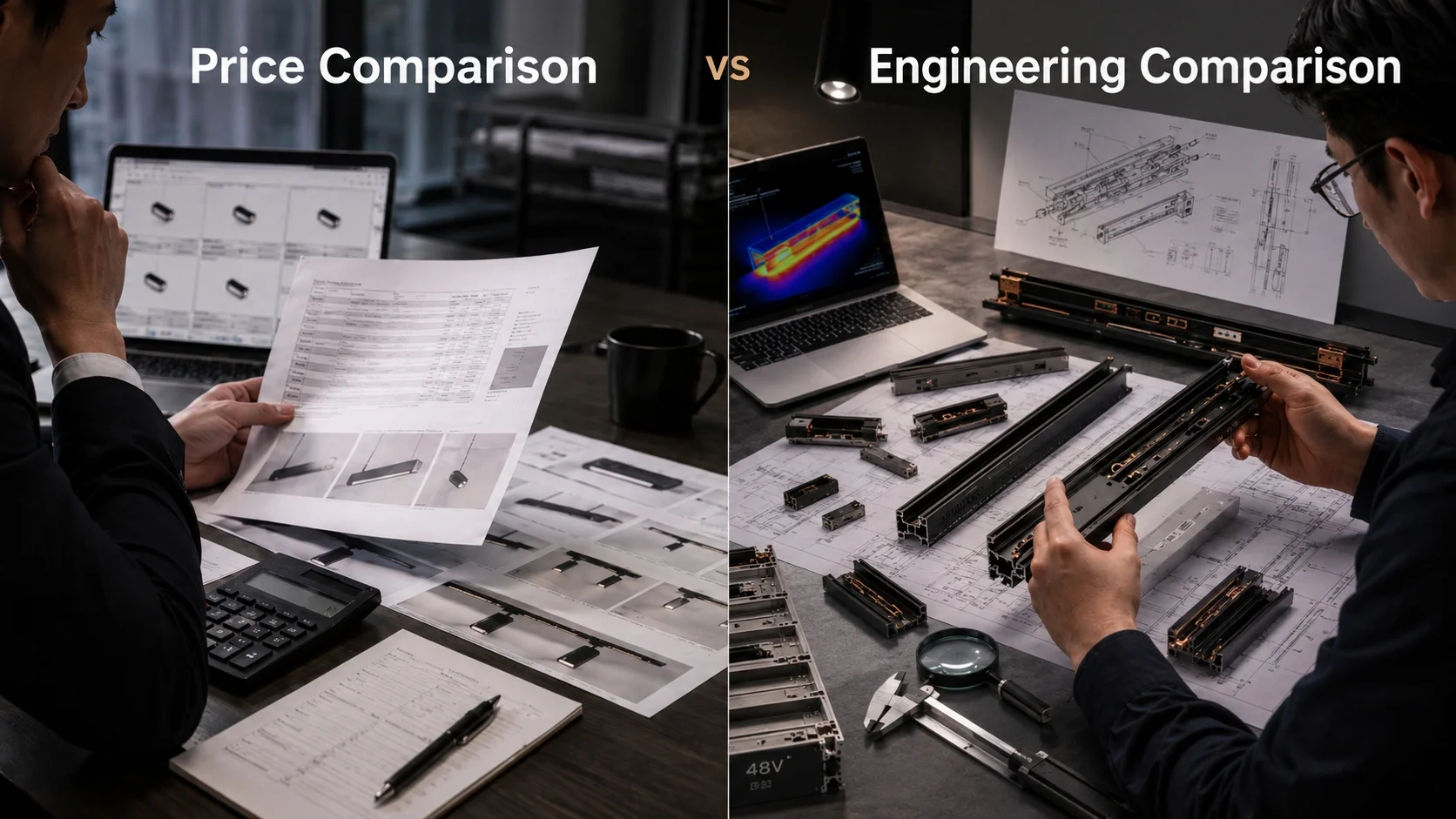
Key Shift: You are not comparing prices. You are selecting engineering risk levels.
2. Buyer Mental Shift
Professional buyers do NOT evaluate like this:
| ✕ | ✓ |
|---|---|
| price | structural reliability |
| wattage | electrical stability |
| lumens | thermal safety |
| CRI | optical consistency |
| system compatibility |
3. Supplier Engineering Evaluation System
Professional buyers evaluate suppliers using 5 engineering filters.
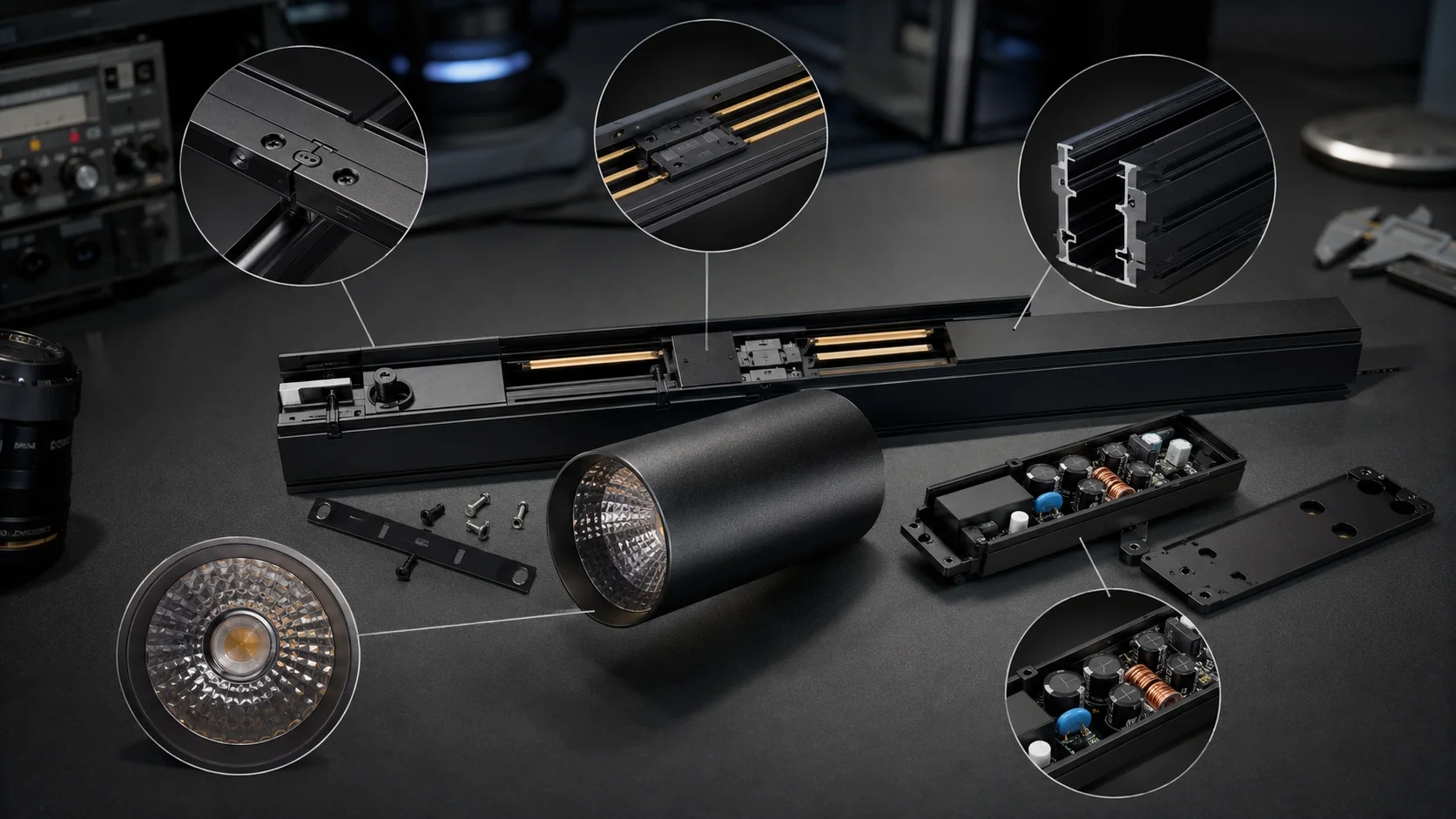
3.1 Structural Stability Filter
Check:
- screw-fixed vs clip-fixed design
- anti-loosening mechanism
- end cap sealing
- deformation resistance
Why it matters
Structural instability leads to:
- light leakage
- module misalignment
- long-term deformation
3.2 Electrical Contact Filter
Check:
- contact material (copper quality)
- spring design stability
- oxidation resistance
- insertion cycle durability
Why it matters
Poor contact =
- flickering
- intermittent failure
- unstable lighting zones
3.3 Thermal Stability Filter
Check:
- aluminum housing design
- heat transfer path
- PCB thermal contact
- operating temperature rise
Why it matters
Heat directly affects:
- LED lifetime
- brightness degradation
- system stability
3.4 Optical System Filter
Check:
- beam uniformity
- diffuser quality
- glare control
- lighting consistency
Why it matters
Optics determines perceived quality, not just brightness.
3.5 System Integration Filter
Check:
- 48V stability
- dimming compatibility
- driver matching
- load distribution
Why it matters
Even perfect components fail if system mismatch exists.
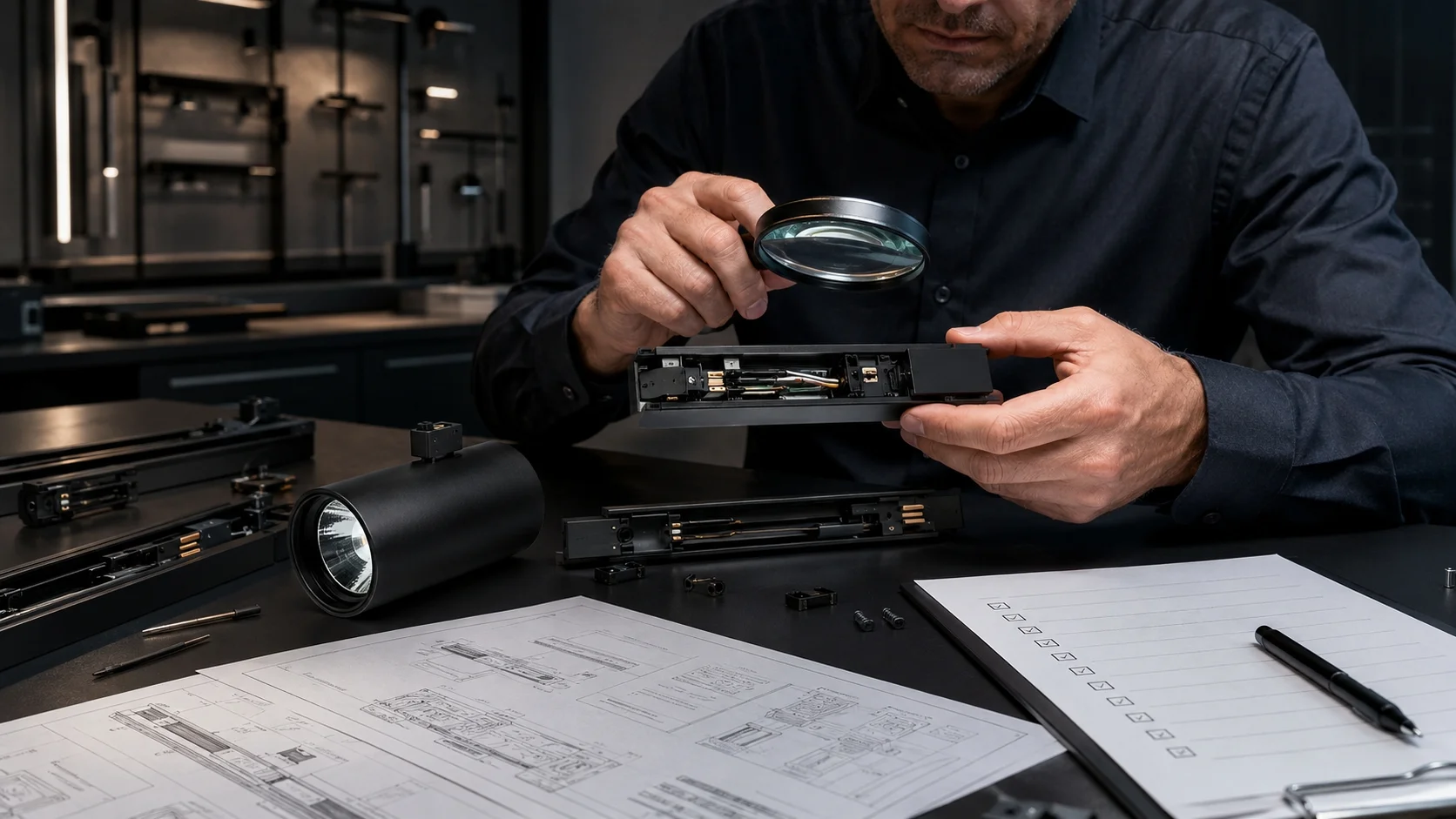
4. Supplier Decision Filter System
Professional buyers do NOT "score suppliers".
They eliminate suppliers.
Decision Rule
If 3 or more engineering filters fail → eliminate supplier immediately before pricing stage
5. Real Project Risk Logic
Most buyers only discover problems AFTER installation.
Typical failures:
- flickering appears after 3-6 months
- modules loosen over time
- brightness inconsistency increases
- maintenance frequency rises
Hidden Truth
Project cost is not defined by purchase price. It is defined by failure recovery cost.
In many cases: maintenance cost = 2-3x price difference between suppliers
6. Supplier Signal Detection System
Professional buyers do NOT rely on claims.
They observe signals:
| Signal | Interpretation |
|---|---|
| Supplier avoids internal structure explanation | Engineering transparency is low |
| Supplier cannot explain engineering decisions | Engineering competence is unvalidated |
| Supplier only focuses on price & catalog | They are a reseller, not a manufacturer |
| No test data or validation method | Quality claims are unsupported |
Interpretation Rule: The less engineering explanation a supplier provides, the higher the project risk.
7. Final Supplier Decision Output
After evaluation:
Most buyers believe price comparison is the starting point.
It is not.
Engineering validation always comes first.
Because lighting systems are not replaceable once installed.
Do not compare prices first. Compare engineering risk first.
8. Buyer Action System
Before requesting quotations:
- Request internal structure explanation
- Verify electrical contact design
- Confirm thermal management method
- Check optical system in real application
- Evaluate driver configuration
- Apply 5-filter elimination system
Need a Pre-Purchase Engineering Evaluation?
If you are evaluating multiple magnetic track lighting suppliers, we can help you review:
- structure design
- electrical contact system
- thermal design
- optical system
- system integration risk
Send us your drawings or quotations for a pre-purchase engineering evaluation.
Send for Engineering Review →