48V vs. 24V Magnetic Track Lighting: Which One Is Right for Your Project?
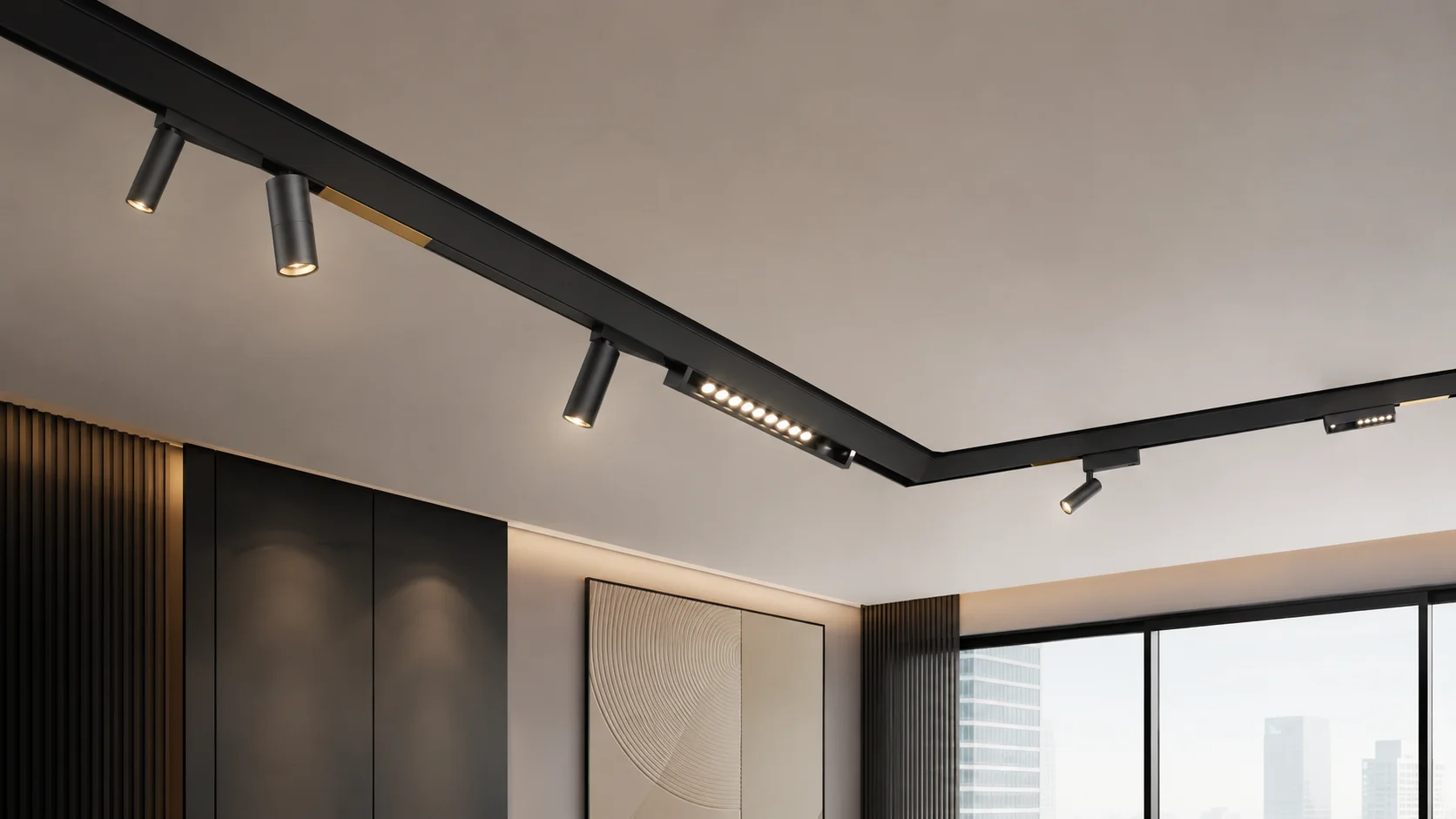
Choosing between a 48V track system and a 24V track system is one of the first technical decisions a buyer faces when specifying magnetic track lighting for a commercial project. The wrong voltage choice leads to voltage drop issues, shorter track runs, and underperforming light output at the far end of the installation.
Here is a practical comparison for importers, lighting designers and contractors who need to specify a low voltage track system for hotels, retail spaces, galleries or office projects.
Quick Answer
48V track system is the standard for commercial and architectural projects. It supports longer track runs (up to 20m), minimal voltage drop, and higher total load per driver. Choose 48V for hotels, retail stores, galleries and any project with track runs over 5m.
24V track system is suitable for short residential runs under 5m and budget-conscious installations. Voltage drop becomes visible beyond 3-5m, limiting its use in larger commercial spaces.
48V Track vs 24V Track: Why Voltage Matters for Commercial Projects
The core difference is simple physics: at the same power output, a 48V system carries half the current of a 24V system. Lower current means less energy lost as heat along the track, which directly affects how far you can run the track before the last module is noticeably dimmer than the first. This is called voltage drop — the single biggest practical concern when choosing between a 48V track vs 24V track for a real project.
Max Track Length
A 48V magnetic track system supports runs of up to 20 metres with minimal voltage drop. A 24V system starts showing visible dimming beyond 3–5 metres. For any commercial-scale installation — a hotel corridor, a retail wall display, an open-plan office — 48V is the only practical choice.
Load Capacity
Because 48V delivers more power at the same current, one 48V driver can typically power more modules than a 24V driver of the same amperage. This means fewer drivers per project, simpler wiring, and lower installation cost.
Safety
Both 48V and 24V are classified as extra-low voltage and are touch-safe. There is no safety advantage to choosing 24V over 48V in a properly installed magnetic track system.
| Feature | 24V System | 48V System |
|---|---|---|
| Max track run | 3–5m | Up to 20m |
| Voltage drop | Significant beyond 3m | Minimal |
| Safety rating | Touch-safe (ELV) | Touch-safe (ELV) |
| Typical application | Residential, short runs | Commercial, architectural |
| Driver load capacity | Lower per driver | Higher per driver |
FAQ: 48V vs 24V Magnetic Track Lighting
Need help choosing the right voltage for your project? Tell us your track length, ceiling type and module requirements — we can match the correct 48V system configuration for your project.
Email Your Project Details →